MomsLoop · Community & reuse · Pilot website
MomsLoop. Little things.
The start of a bigger community.
For MomsLoop, we built a pilot website around reusing children’s items and connecting local families. It introduces the product direction, collects feedback from parents, businesses and creators, and invites people to join the waitlist.
Visit website · momsloop.pl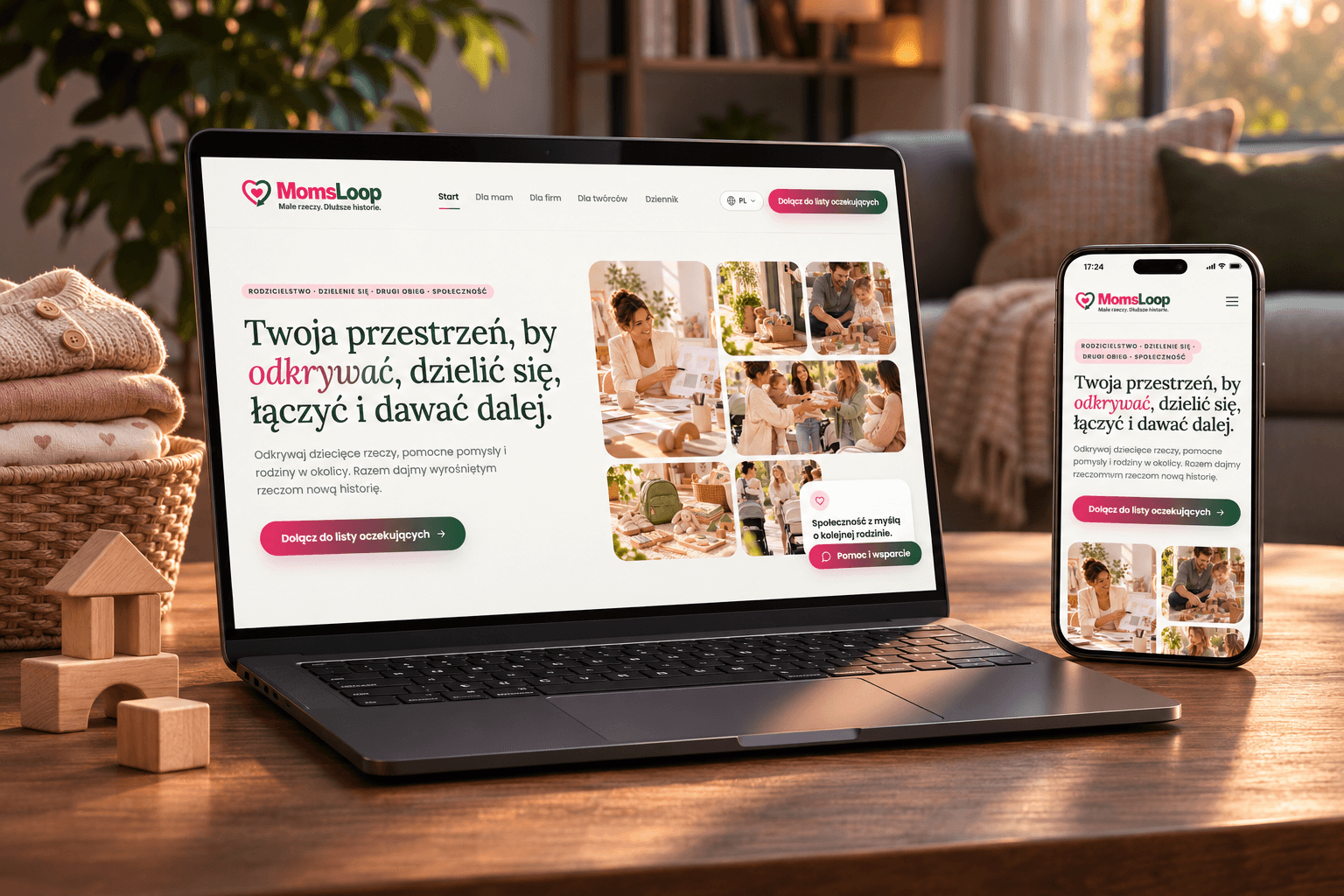
- Project
- MomsLoop
- Type
- Pilot website and audience research
- Scope
- PL/EN/UK · Surveys · Waitlist · AI · CMS
- Status
- Website live · Product in development
The challenge
Before building the marketplace and apps, MomsLoop needed to understand its future users. Parents, businesses and creators required separate journeys and questions relevant to their roles.
The team needed to update copy, images and questionnaires and review responses without involving a developer for every change.
Our approach
We designed a responsive Polish, English and Ukrainian website with separate audience pages. Surveys, the waitlist, journal and AI support serve the research and early-interest stage.
An administration dashboard supports page and survey editing, drafts, publication, response review and exports.
What was delivered
- Responsive PL/EN/UK website for parents, businesses and creators
- Three survey journeys and a questionnaire editor
- Waitlist and pilot contact forms
- Journal, FAQs and AI support
- CMS with media library, drafts and publication history
- Response review and export tools
The outcome and project stage
MomsLoop has a live website for explaining the idea, gathering feedback and collecting interest before the product launch. The team can evolve content and research using input from prospective users.
The delivered scope is the pilot website. The marketplace, transactions and mobile apps remain in development and are not presented as launched features.
Anjana Technologies · Warsaw